
What if the world’s most feared energy source is actually one of its safest?
Article by Anusha
How does the safety profile of nuclear power compare with that of other energy sources when assessed through modern risk and efficiency standards?
“The release of atomic power has changed everything except our way of thinking.” — Albert Einstein
The world stands at an energy crossroads. Nuclear power, with its unmatched reliability, high energy density, and near-zero carbon emissions, could be humanity’s most potent tool against climate change. Unlike solar or wind, nuclear plants run 24/7 and require far less land. Yet, nuclear energy provides barely 10% of global electricity.

source: Our world in Data

source: EWEA
Misconceptions and fear, mostly from Chernobyl, Three Mile Island, and Fukushima, have overshadowed progress. Yet, the data tells a different story. Three Mile Island caused no deaths or health issues. Chernobyl led to 51 deaths over 30 years. In contrast, fossil fuels have killed over 100 million people in 50 years due to pollution.

source: Our world in data
In comparison to fossil fuel usage, where frequent oil spills and coal mining accidents occur, newer generations of nuclear reactors like pebble bed reactors and small modular nuclear reactors (SMRs) have vigorous safety standards in place.
Pebble bed reactors are designed so that nuclear chain reactions, unlike what happened at Chernobyl, cannot continue to multiply and cause a meltdown —even in the event of complete failure of the reactor’s machinery. The reactor has been designed to withstand high temperatures. It can cool by natural circulation and survive potential accidents that may raise the temperature up to 1,600 °C. This allows for higher thermal efficiencies of up to 50% as compared to traditional nuclear power plants. Unlike water, gases do not dissolve contaminants or absorb neutrons; therefore, the core has fewer radioactive fluids, thus preventing disasters like what happened at Fukushima.

source: Wikipeadia
SMRs too are gaining traction due to their smaller, modular forms that can be built in factories and transported to sites for assembly. Many SMRs are designed to be installed underground or in submerged structures, providing extra protection from threats like natural disasters. SMRs use natural forces to manage heat and shut down safely. In the event of a power loss it can cool itself without human intervention and prevent meltdowns from happening. SMRs generate less power hence having less radioactive material, causing potential accidents to have a lower impact.
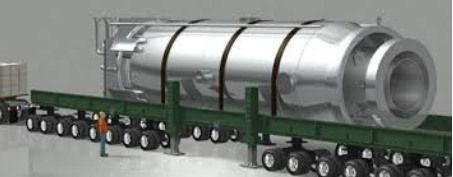
source: IEAE
Both technologies enhance nuclear safety, eliminate meltdown risks, and offer flexible, decentralized energy solutions.
Countries like the US, UK, and Japan are investing in advanced reactor development and regulations. With investment and public support, nuclear could grow from 10% to a central pillar of the clean energy mix.
In conclusion, when assessed through modern risk and efficiency standards, nuclear energy emerges not as the threat it is often perceived to be, but as one of the safest and most reliable energy sources available. At a time when the world urgently needs scalable, low-carbon energy solutions, nuclear power offers a compelling path forward. The challenge now lies not in the technology itself, but in reshaping public understanding and policy support to fully realize its potential as a cornerstone of a sustainable energy future.
References:
Our World in Data. Energy production, emissions, and safety statistics. https://ourworldindata.org
European Wind Energy Association. Energy capacity and growth statistics.
International Atomic Energy Agency. Small modular reactors (SMRs) and nuclear safety. https://www.iaea.org
U.S. Energy Information Administration. Capacity factors for utility scale generators. https://www.eia.gov


Comments