
Blue-Green Infrastructure in Singapore
By Chia An Jie Dana
Amid the growing emphasis on technological innovations to combat climate change, a spotlight is much needed on the importance of nature-based solutions. In particular, one such feature is common around us yet receives little attention: blue-green infrastructure.
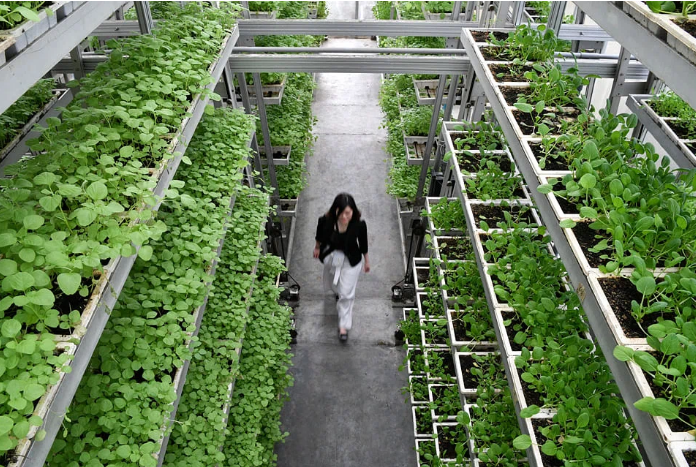
Green infrastructure uses plants and soils to manage urban challenges rather than relying on technocratic solutions. These can include features such as vertical greenery and green roofs. On the other hand, blue infrastructure employs water-based features like the naturalised river in Bishan-Ang Mo Kio Park to achieve the same goal. Together, blue-green infrastructure integrates both plant-based and water-based solutions to optimise urban environmental benefits.
So what does blue-green infrastructure actually look like in Singapore? Located at Nanyang Crescent, Nanyang Technological University’s (NTU) Pioneer and Crescent Halls showcase an integrated urban-environmental design. The site was initially a wetland, making it difficult to build housing there. Yet, rather than working against the natural features present, the design of these halls worked with them. Built in 2014, these Halls consist of eight tree-like blocks, each supported on stilts that raise them above the huge pond below. Boardwalks weave through the pond, dotted by biodiverse greenery. By retaining naturalised blue-green infrastructure, the surrounding environment cools effectively through evapotranspiration. This plays a big role in reducing the energy costs for cooling, allowing the halls to experience a residential thermal transfer value of only contributing to a Residential Envelope Transmittance Value of just 14.50 W/m², compared with the maximum permissible value of 22.00 W/m² (Building and Construction Authority, 2019). This highlights how integrating nature-based solutions in urban design can naturally achieve what many technocratic solutions strive towards.

But how? Evaporative cooling from water bodies can reduce localised ambient temperatures by around 2°C (Tominaga et al., 2015). In dense Singapore, this temperature reduction can help to combat the urban heat island effect that traps heat between tall buildings. Moreover, blue-green infrastructure on roofs can improve water uptake, effectively reducing and slowing down surface runoff onto the impermeable ground surfaces (Aluvihara et al., 2025). Such an effect takes pressure off local drainage systems during heavy rainfall, reducing the likelihood of floods that are both dangerous to human lives and costly to infrastructure.
As a component of urban design, blue-green infrastructure successfully mitigates environmental hazards without necessarily infringing on urban development. It is best used in dense urban areas that leave little room for large swaths of untouched nature like forests – a phenomenon widely observed in land-scarce Singapore. In the Central Business District, blue-green infrastructure also helps meet the Landscape Replacement Area (LRA) requirement, which states that all developments must replace 100% of the greenery lost during construction. While blue-green infrastructure cannot fully replace the environmental benefits of a full ecosystem, it mitigates some of the loss while allowing for urban development.
However, initial implementation can be costly. Roof gardens in Singapore can cost between $120 and $400 per square meter (Prince’s Landscape, n.d.). Taking the upper estimate, a roof canopy feature of a regular building could cost upwards of S$2.2 million. Furthermore, tree planting could cost minimally $200 per tree (Biddaro, 2026). Evidently, exorbitant costs like these can easily push blue-green infrastructure projects out of commercial viability.
Yet, there’s still (financial) hope. The $50 million SG Eco Fund provides monetary support for projects that enhance environmental sustainability. This fund aims to encourage eco-projects that focus on community action and innovation. It has assisted familiar blue-green features such as the 2,800 sq ft CDL MicroForest at City Square Mall (Hicks, 2026).

The Skyrise Greenery Incentive Scheme (SGIS) 2.0 also makes rooftop and vertical greenery financially viable by funding up to 50% of installation costs (Centre for Urban Greenery and Ecology, 2025). With these structural support schemes in place, more commercial buildings in Singapore should be incentivised to adopt blue-green infrastructure to create a more comfortable urban environment that echoes Singapore’s spirit of being a city in nature.
References
(n.d.). Green Roof Garden Systems In Singapore. Prince's Landscape Pte Ltd. https://www.princelandscape.com/green-roof-system/
(n.d.). Landscaping Cost in Singapore 2026. Biddaro. https://www.biddaro.com/sg/cost/landscaping
(2025, October 19). Skyrise Greenery Incentive Scheme (SGIS). Centre for Urban Greenery and Ecology. https://cuge.nparks.gov.sg/grants/skyrise-greenery-incentive-scheme--sgis-/
Building and Construction Authority. BCA Awards 2019. https://www.scribd.com/document/428748239/gm2019
City Developments Limited (2025). CDL MicroForest [Photograph]. https://cdlsustainability.com/nature-positive-social-impact/cdl-microforest/
Hicks, R. (2026, March 24). Singapore real estate firm eyes growth for microforests to combat urban heat. Eco-Business. https://www.eco-business.com/news/singapore-real-estate-firm-eyes-growth-for-microforests-to-combat-urban-heat/
Nanyang Technological University. Crescent Hall [Photograph]. https://www.ntu.edu.sg/life-at-ntu/accommodation/undergraduate-housing/detail/crescent-hall
Tominaga, Y., Sato, Y., & Sadohara, S. (2015). CFD simulations of the effect of evaporative cooling from water bodies in a micro-scale urban environment: Validation and application studies. Sustainable Cities and Society, 19, 259-270. https://doi.org/10.1016/j.scs.2015.03.011


Comments